
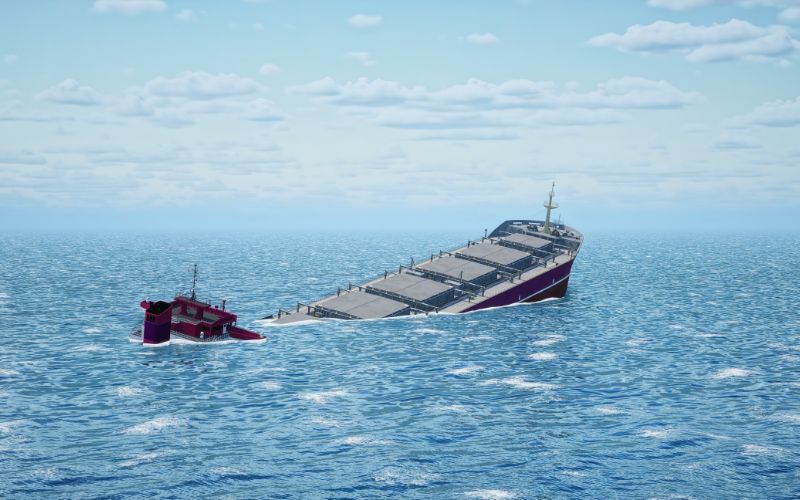

Loss and abandonment in marine insurance are a serious concern for every transportation business owner. These are some complex risks that require careful handling and a deep understanding on the part of the policyholder when buying a suitable policy.
In this article, we will discuss what loss and abandonment are in marine insurance and why you should care about them.
What is Loss in Marine Insurance?
Loss in marine insurance or freight insurance refers to damage or destruction of a ship or its cargo. The reason for this loss can be anything, like a natural disaster, collision, accident, theft, piracy, etc. Moreover, the extent of this loss can vary from partial to complete loss.
Based on the extent of loss, the amount of marine insurance compensation is decided. That is why understanding the type of loss is crucial.
Marine Insurance: Types of Loss
The three main types of loss include total loss, partial and constructive total loss. Partial loss refers to the situation where the insured property is lost or damaged to some extent, not completely.
A total loss occurs when the property is completely destroyed or damaged beyond repair.
Finally, a constructive total loss means that the cost of repairing or replacing the damaged insured property exceeds the actual value of the property.
What is Abandonment in Marine Insurance?
Abandonment in marine insurance refers to the situation in which the cargo or ship owner gives up the right to the insured ship due to any reason, such as the cargo or ship being damaged or lost beyond repair, or the cost of insured repair exceeding the value of the ship or cargo. In such a situation, the cargo or ship owner abandons their right to the insurance company, which then assumes the responsibility of disposing of the cargo.
It should be noted that the abandonment of a ship is a lawful procedure and should be done as per the rules. The cargo or ship owner must inform the insurer before abandoning the vessel and provide the reason for the abandonment. Moreover, the abandonment needs to be accepted by the insurance company before it becomes effectual.
How Loss and Abandonment Claims are Handled in Marine Insurance?
To handle loss and abandonment claims efficiently, specific rules and regulations must be followed.
Inform the Insurer
The very first step to get your freight insurance claim is to inform the insurer about the said loss or abandonment.
- For Loss: In the event of a loss, inform the insurance company immediately. Provide them with all the necessary information, including the date of the incident, the vessels involved, and the nature of the loss.
- For Abandonment: In the event that the policyholder wishes to abandon the insured ship due to excessive loss or damage, they must submit a formal letter of abandonment. The letter serves as proof that the policyholder has relinquished the insured ship’s rights in exchange for compensation.
Damage Assessment
Next, the insurer will conduct a damage assessment to determine the extent of coverage required. The assessment will involve an investigation into the cause of loss or damage, and an evaluation of the vessel’s value will be done to determine if any recovery is possible.
Moreover, the insurer may request additional documents or evidence to support the process, such as a repair bill, photographs, or witness statements.
Claim Settlement Process
Finally, if the insurance company approves the marine insurance claim, then they will issue the claim settlement amount. The policyholder will receive compensation for the vessel’s value, as well as the cost of repair and replacement. The policyholder may choose to accept the compensation amount or negotiate for a higher amount for their loss.
It should be noted that the claim settlement process may take time due to the numerous steps involved; moreover, if a negotiation occurs between the insurer and the insured.
Loss and Abandonment Claim Issues Faced by Policyholders
Problems in Proving Constructive Loss
Policyholders may face difficulties in proving that the extent of constructive loss of insured property exceeds its actual value, which can lead to delays in the marine insurance settlement process.
Missing Documentation
Missing or incorrect document submission is another reason for a delay in marine insurance claims. Incorrect documents may also lead to claim rejection; thus, proper documentation is necessary.
Loss Valuation Issue
Another problem that policyholders face in marine insurance settlements is the valuation of loss. The calculation of the valuation amount can be difficult due to constant market fluctuations, which can cause delays in settlement.
Summing Up
Loss and abandonment are integral parts of freight insurance; therefore, it is crucial for policyholders to understand them in order to make a successful claim.
The most important thing is to choose a reliable insurance company for smooth claim settlement, someone like TATA AIG. Their marine insurance claim settlement process is quite straightforward. Besides, they offer customisable plan coverage, support international trade, and, most importantly, offer comprehensive financial protection.

Comments are closed.